• What we do

    full-cycleFull Cycle Developmentstaff-augmentationIT Staff Augmentationai-developmentAI DevelopmententerpriseEnterprise Application Developmenttech-consultingTechnology Consulting
    Service Preview
    full-cycle
    Service preview

    Full Cycle Development

    End-to-end software development from concept to deployment, using cutting-edge technologies and best practices.

    Learn more
  • Blog
    In-House Software Development VS Outsourcing: Strategic Guide for 2026The DeviLLM Bargain: Gain Superhuman Speed… But Can You Handle the Risk?The JavaScript Diet: 33% Bloat Loss.Pretty Lies or Ugly Truths? Debunking 10 Software MythsIs SaaS Dead? Rethinking Software's Role
    Company News
    Process Monitoring Events - Version 4.1 Official LaunchScientific Paper: Refinement of the Cauchy-Schwartz inequalityTensorial Simpson Type Inequalities of Self Adjoint Operators in Hilbert SpaceGeneralization of the Buzano's Inequality and Numerical RadiusNew Partnership with HomeStory Rewards Corporation
    Case Studies
    Operations, Synced: End-to-End Live Process Monitoring Meetings, Transformed: Gesture-Led WorkspaceFrom Static to Addictive: Content Exchange PlatformOne Hub. Unified Fintech Control.The New Blueprint: AI-Driven Mortgage Engagement
    Featured resource
    Featured article

    Operations, Synced: End-to-End Live Process Monitoring

    Integrated disconnected tools and data sources to deliver real-time operational insight for a 200+-employee SaaS, IoT, and FinTech enterprise.

    Read more
    See all case studies
  • About Us
  • FAQ
Get Started

We deliver advantage beyond features.
What will you ship?

Get Started
  • Full Cycle Development
  • IT Staff Augmentation
  • AI Development
  • Enterprise Application Development
  • Technology Consulting
  • Case Studies
  • Blog
  • Company news
  • About
  • FAQ
  • Contact Us

Follow Us

Site MapTerms of UsePrivacy Policy
© Energmа 2026. All rights reserved.
Železnička 94, 11300 Smederevo, Serbia
Article thumbnail

The Price You Set is the Story You Tell: The Complete SaaS Pricing Guide

Here's a fun fact: A 1% improvement in how you monetize can lead up to a 12.7% increase in profit. And a well run pricing strategy? It's up to 7.5x more effective at generating growth than acquisition strategies alone.

Choosing the right SaaS pricing model isn't a spreadsheet exercise. It's a strategic lever that demands alignment between product, market, and momentum. The stage you're in, the value you deliver, the way your users scale — everything assembles in a single number which defines your story.

If you don't have a pricing strategy in place, revenue is leaking with every new signup and you're leaving huge money on the table. Defining how you charge is one of the most important decisions you'll ever make in order to shape revenue, investors confidence, and long-term growth.

This guide compares SaaS pricing models and strategies and highlights the differences between them. Let’s break down what works, why it works, and how to as you scale.
Quick Summary

  • A 1% improvement in monetization can lead to a 12.7% profit boost. A well-run pricing strategy is 7.5x more effective for growth than acquisition alone.
  • Value-based pricing is the gold standard but early-stage SaaS must consider a lot of factors before committing.
  • Adobe's and HubSpot's successes prove that charging for perceived value sustains premium positioning and long-term revenue.
  • SaaS pricing models define how value is packaged: by user, feature, usage, or flat subscription. The right one must align with your product stage, customer base, and growth goals.
  • Pricing is a dynamic system — track LTV/CAC, Gross MRR Churn, Expansion MRR, and Upgrade MRR. Adapt fast and evolve with your product.

What are SaaS Pricing Strategies?

Pricing strategies are methods used to determine the pricing of the product or service. Various moving parts contribute to pricing strategies, including competitors’ pricing, costs, and expenses. Let’s look at some of the popular pricing strategies.

Types of SaaS Pricing Strategies

Cost-based pricing

Cost-based (or cost-plus) pricing is what people automatically think of when they think of “pricing strategy.” It’s the most basic form of pricing: add up all your costs, add a percentage of profit margin, and that’s where you set your prices. It’s a safe choice, and simple to understand and calculate.

That’s where the good news ends, however. Cost-based pricing is nowhere near the best solution for maximizing SaaS revenue since the cost for delivering a single account of a SaaS product can be very low. Your pricing should be based on the value that your customers will get out of using your product, not how much you paid your developers.

Price = Customer Acquisition Cost (CAC) + Cost of Goods Sold (COGS) + Margin

CAC is the money spent to acquire each customer. COGS in SaaS is typically cloud infrastructure, engineering, and support.

For example, your customer acquisition cost is $100, and COGS per customer is $50, and the desired margin is 20%, your price comes to $150 + $30 = $180.

Cost-based pricing keeps you comfortable, not competitive. It ensures you survive, but never scale. Because when you price this way, you’re saying, “We’re worth what we spend,” instead of, “We’re worth what we deliver.” Know your numbers but never make a price from them. Costs define your floor, not your ceiling.

Penetration pricing

Penetration pricing involves setting a low initial price to rapidly gain market share and attract new customers. It’s usually used by new entrants in a competitive market.

Here's how it works:

  • Capture customer interest: By offering your SaaS product at a lower price, you'll attract users who might otherwise overlook a newcomer in a saturated market.
  • Gain market share quickly: When the price dips low enough, curiosity beats loyalty. People switch just to see what it’s all about.
  • Establish a user base: Once the initial hype and demand settle, you'll have a solid foundation of customers who can help spread positive word-of-mouth and build data you can learn from.

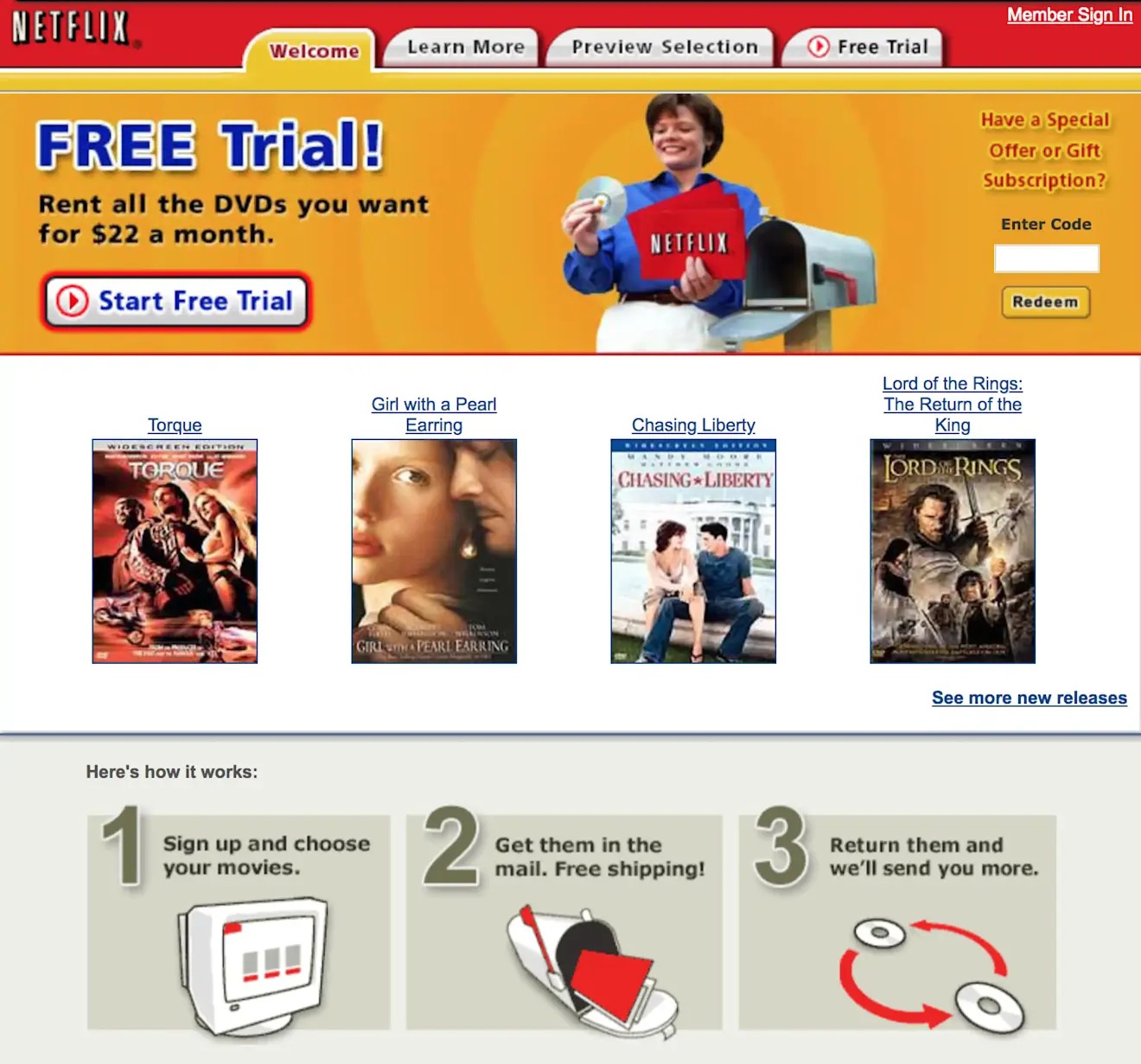
Netflix mastered this before SaaS was even a word. They entered a market where DVD rentals were the norm. In 1999, they started offering a subscription of 4 DVD rentals for $15.95. That’s less than $1 per DVD, whereas Blockbuster was charging $4.99 for a single DVD for a three-day rental period. Penetration pricing gave Netflix their initial subscriber surge and later, the data and leverage to raise prices to $22/month without losing loyalty.

Blog image

While this strategy can help gain a stronghold in a new and competitive market, low prices can cause losses, making it an unsustainable long-term strategy. Stay cheap for too long, and you’ll train your customers to value you as a bargain rather than a breakthrough.

Competitor-based pricing

Just as the name suggests, competitor-based pricing anchors itself to what your competitors are charging. It only considers the publicly available information about your competitors’ pricing and does not consider factors like market demand or production costs. You can set your price higher, lower, or level with them. It’s simple, fast, and tempting — especially for newer companies still defining their product value and without existing sales data to back up their decisions.

While this approach might keep you alive in a crowded market, it keeps you trapped there. The market is setting the price for you. And when you follow, you surrender control, innovation, and upside.

Our advice? Look, but don’t touch. You want to know where competitors stand so you’re in the same range, but never let them dictate your decision.

Value-based pricing

Value-based pricing is one of the most effective SaaS pricing strategies because it’s based on your product’s perceived value and the customer’s willingness to pay.

To put it bluntly, value-based pricing is the only pricing strategy SaaS companies should master. Instead of looking inwardly at your own company or laterally towards your competitors, with value-based pricing, you look outward. You look for pricing information from the people who are going to make a decision depending on your price: your customers.

So what’s the downside, then? All this research takes serious time and work. Learning how willing each customer is to pay isn’t the easiest thing to do, which is why most people stick to competitor-based or cost-plus pricing. You have to be committed to finding out about your customers and your product to perform value-based pricing effectively.

If customers are willing to pay for your service because they understand its value, you can charge a premium and generate more revenue. This model also allows for price re-evaluation, should you need to modify or update your service.

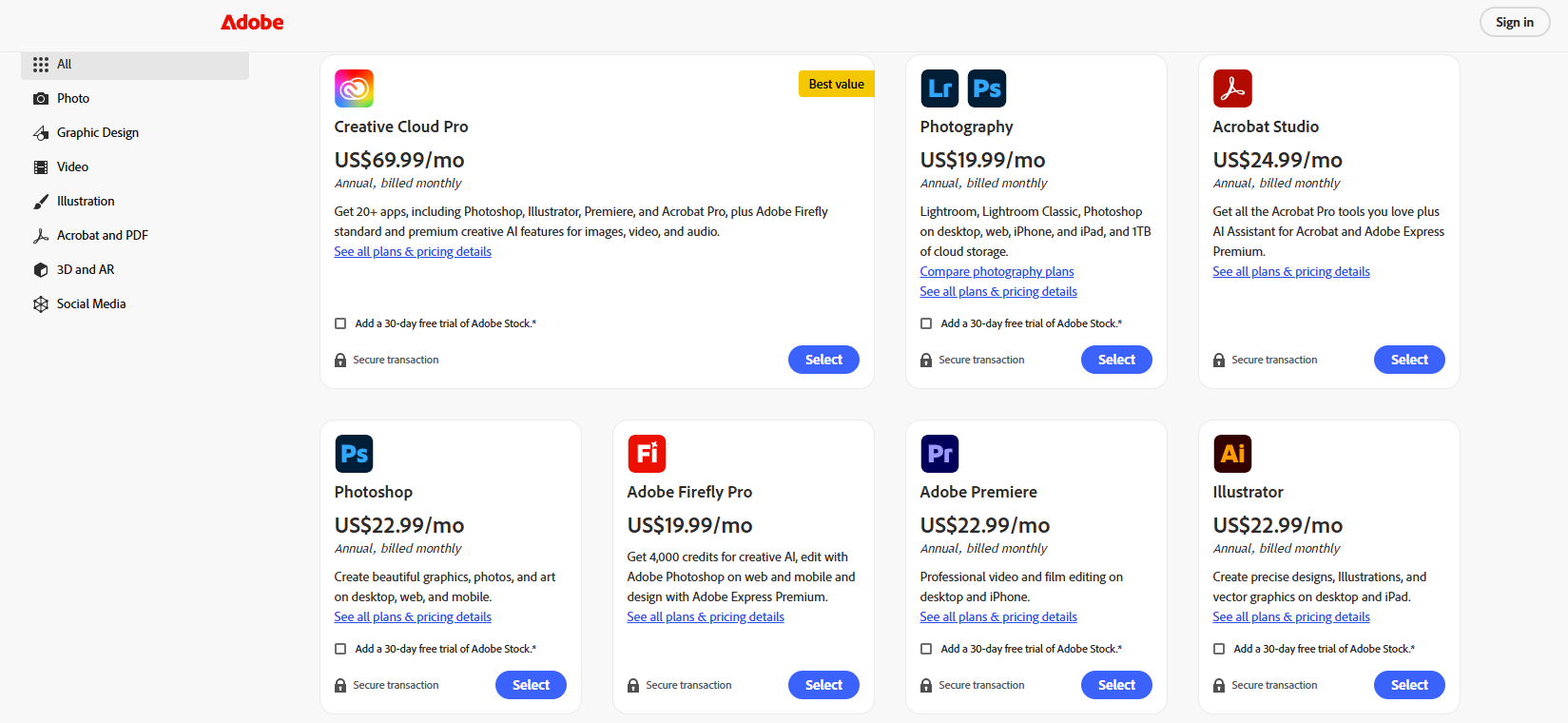
Adobe uses a value-based pricing model. Its apps are much more highly-priced than alternatives such as Affinity Photo and GIMP. But because it knows the value it provides for its customers, it prices its services accordingly.

Blog image

What are SaaS Pricing Models?

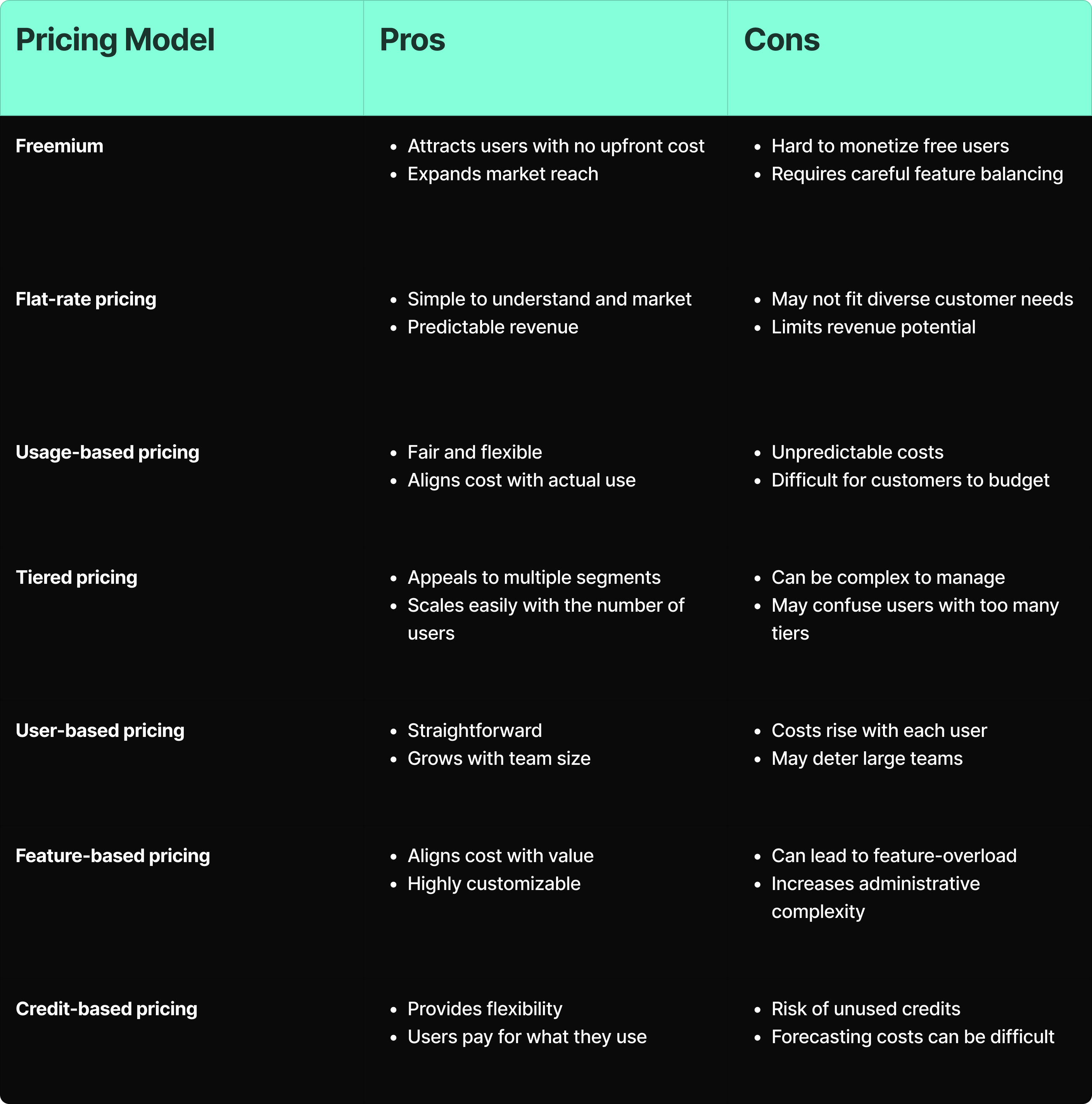
A SaaS pricing model defines how your product’s value is packaged and sold, whether by user, feature, usage, or a flat subscription. The table below provides a brief overview of each popular model’s pros and cons.

Blog image

Let’s look at some of the SaaS pricing models along with examples in detail.

Freemium pricing

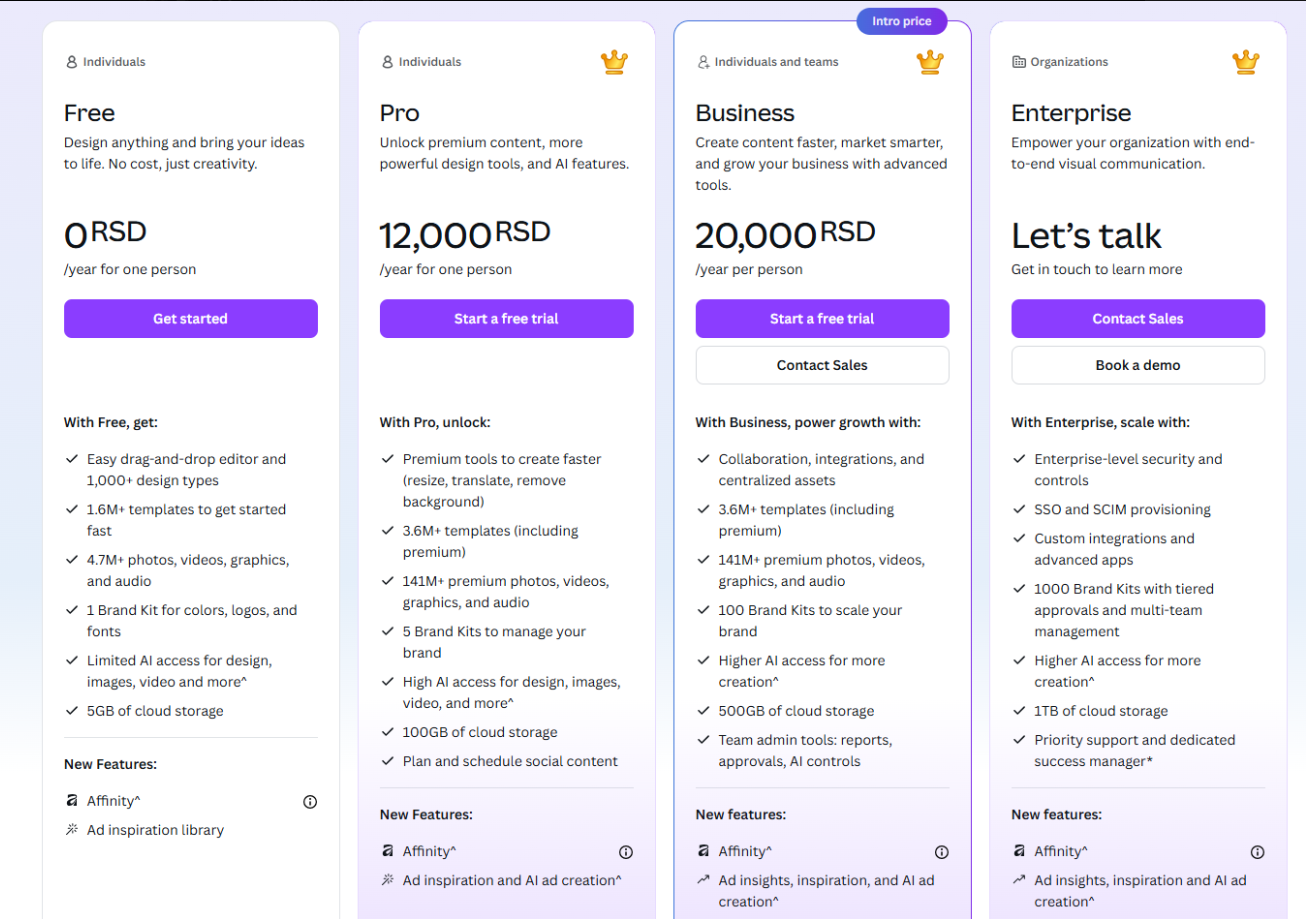
The freemium pricing model provides certain features for free while charging for advanced functionalities. It allows users to start at no cost, encouraging broad adoption. The free tier usually has limitations on features, capacity, or types of use cases.

While it removes the entry barrier, this model’s success depends on a careful balance: your free version needs to be compelling enough to attract users but limited enough to incentivize upgrades.

Example: Canva offers a 100% free version with limited functionality.

Blog image

Flat-rate pricing

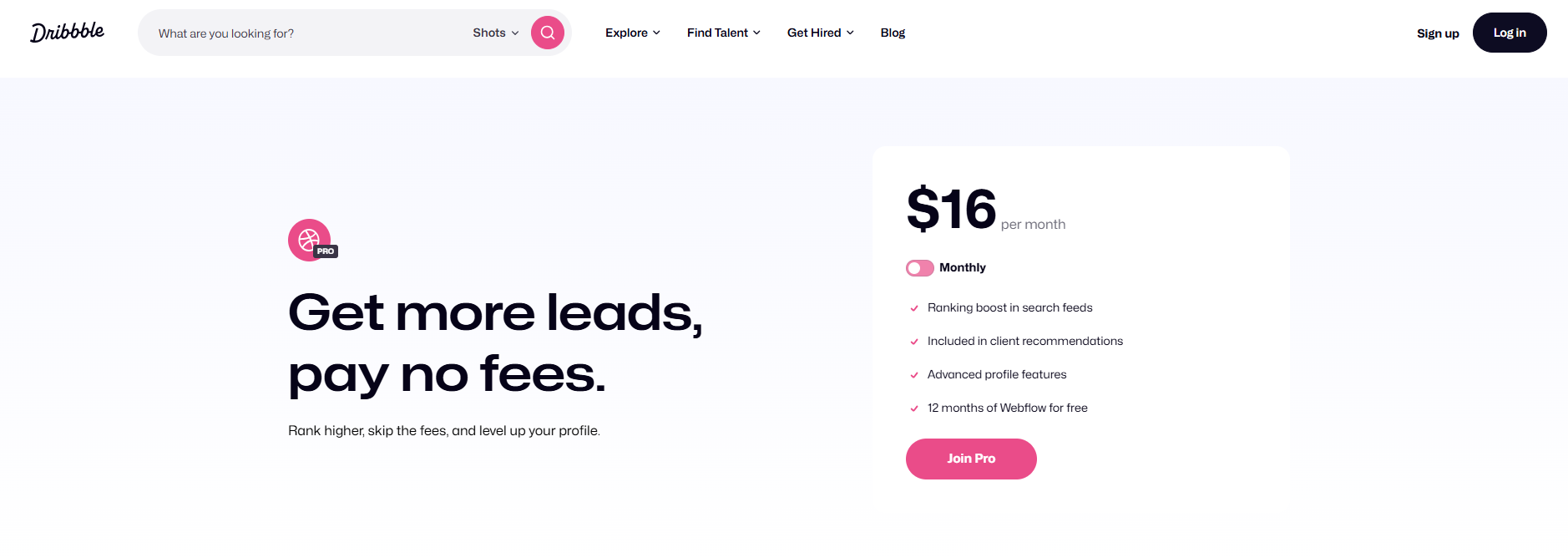
This model is the simplest approach to selling SaaS. You offer one product at one price, with the same set of features – and that’s it. Customers typically choose between monthly or annual billing, often with a discount for annual subscriptions.

There are several benefits to using a flat-rate pricing model. First and foremost, the flat-rate price is the easiest to market because you can clearly explain the price in all marketing materials. Additionally, it simplifies forecasting key metrics such as revenue growth, churn, and customer lifetime value.

However, the simplicity can also be problematic: a one-size-fits-all solution might price some customers out and cause others to feel that their needs aren’t being met. For this reason, many SaaS companies eventually evolve toward more flexible pricing models.

Example: Dribbble provides fixed prices with no additional or hidden costs. This makes it easy for current and potential customers to understand the value they’re getting.

Blog image

Usage-based pricing (pay-as-you-go)

In this model, the cost of the product relates directly to how much a customer uses it. Many people find usage-based pricing appealing because it seems to be the fairest: the more you use, the more you pay, and the less you use, the less you pay. Usage here is typically measured through metrics such as data storage used, transactions processed, or the number of API calls made.

On the other hand, the most obvious drawbacks of the model are that customers might not be able to forecast how much they will need to pay and there might be a disconnect between real and perceived value. This encourages mindful spending, as users are aware of how their usage affects costs.

Example: Usage-based pricing is common across both consumer and SaaS products — from Uber and Airbnb to AWS and Stripe. The more you use them, the more you pay.

Tiered pricing model

The tiered pricing model offers two or more different packages with varying features and price points. It helps SaaS companies serve customers with different needs and budgets while allowing for natural upselling. As a customer’s business grows, they can upgrade to a higher tier to access more advanced features or increased usage limits.

The primary benefit is flexibility — it appeals to customers with both simple and complex needs.

However, some may find the tiered model confusing to navigate. Many users start with the entry tier’s lower price, only to later realize they need additional features. If you choose to use this model, clearly communicate what each tier includes and how much it costs.

Example: Zoom offers multiple pricing tiers. Users can start with the free plan, which allows 40-minute meetings with up to 100 participants, and later upgrade to Business or Enterprise plans as their needs grow.

User-based pricing

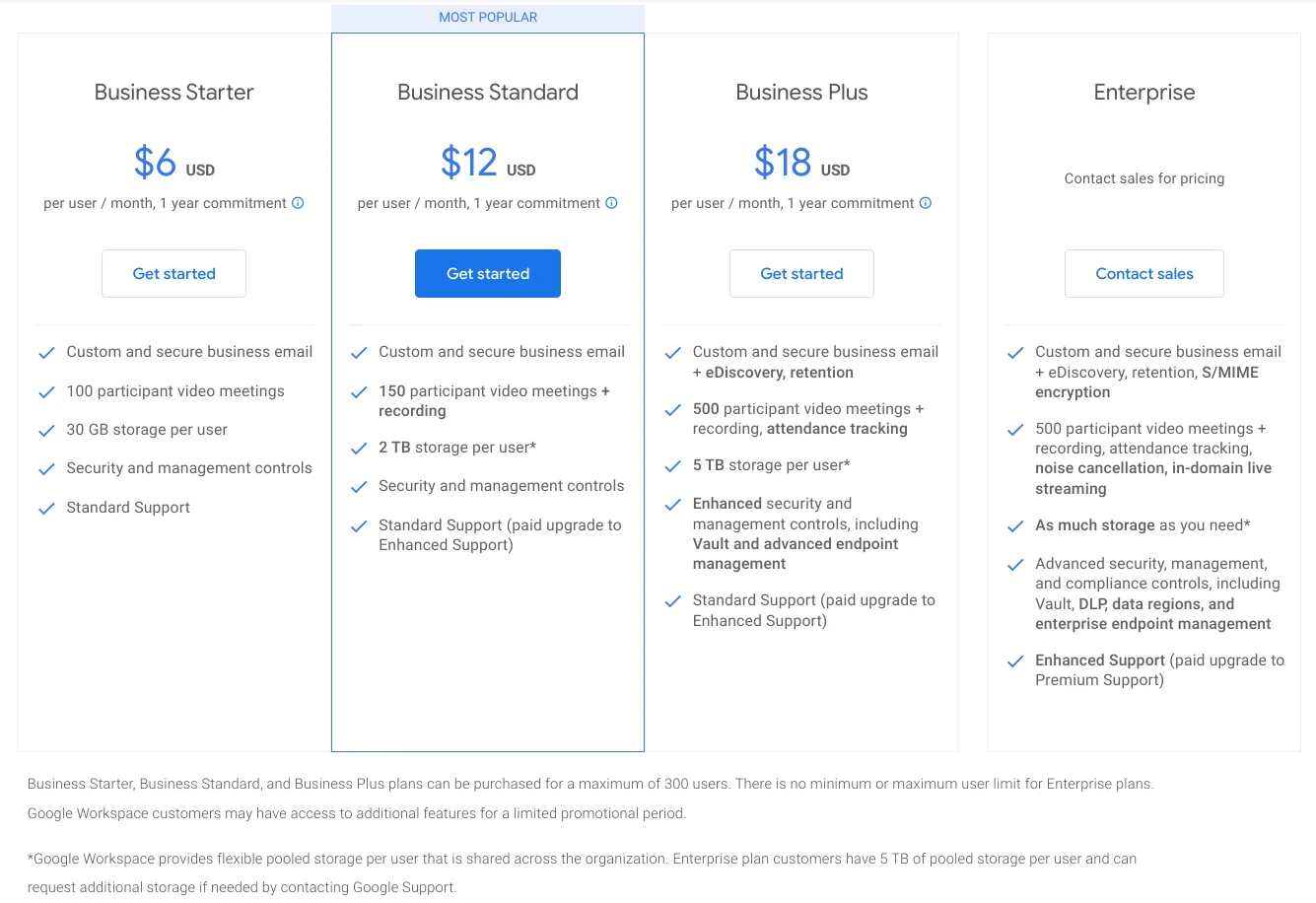
The user-based pricing model is straightforward. The more users (or seats you have), the higher the plan price. When users are removed, the cost decreases. It’s a common approach for collaborative tools like project management software or CRM systems.

The model is an excellent option for scaling with the size of the customer’s organization, making it very popular among B2B and enterprise companies. Its simplicity is appealing — a fixed monthly price for one user, double that price for two, and so on. Customers easily understand what they’re paying for, while your SaaS company benefits from predictable recurring revenue.

However, since each new user raises the cost, it can discourage broader adoption across teams or larger organizations.

Example: Google Workspace charges customers per user per month.

Blog image

Feature-based pricing

The feature-based pricing model allows customers to pay only for the specific features they need. These features are often marketed as add-ons or modules that can be activated or customized as required. The key difference compared to tiered pricing is that customers can build their own plan by adding or removing features individually.

This model is highly customizable, making it ideal for SaaS companies serving diverse use cases. As customers grow, they can scale their subscriptions by enabling new features — directly linking price to value.

However, the abundance of options can make pricing feel complex or overwhelming. Some customers may also hesitate to purchase additional features, even when they see clear business benefits. You can simplify the decision-making process through transparency and clear communication.

Example: HubSpot uses a modular, feature-based approach — companies can start with the free CRM and pay only for marketing, sales, or customer service features as needed.

Credit-based pricing

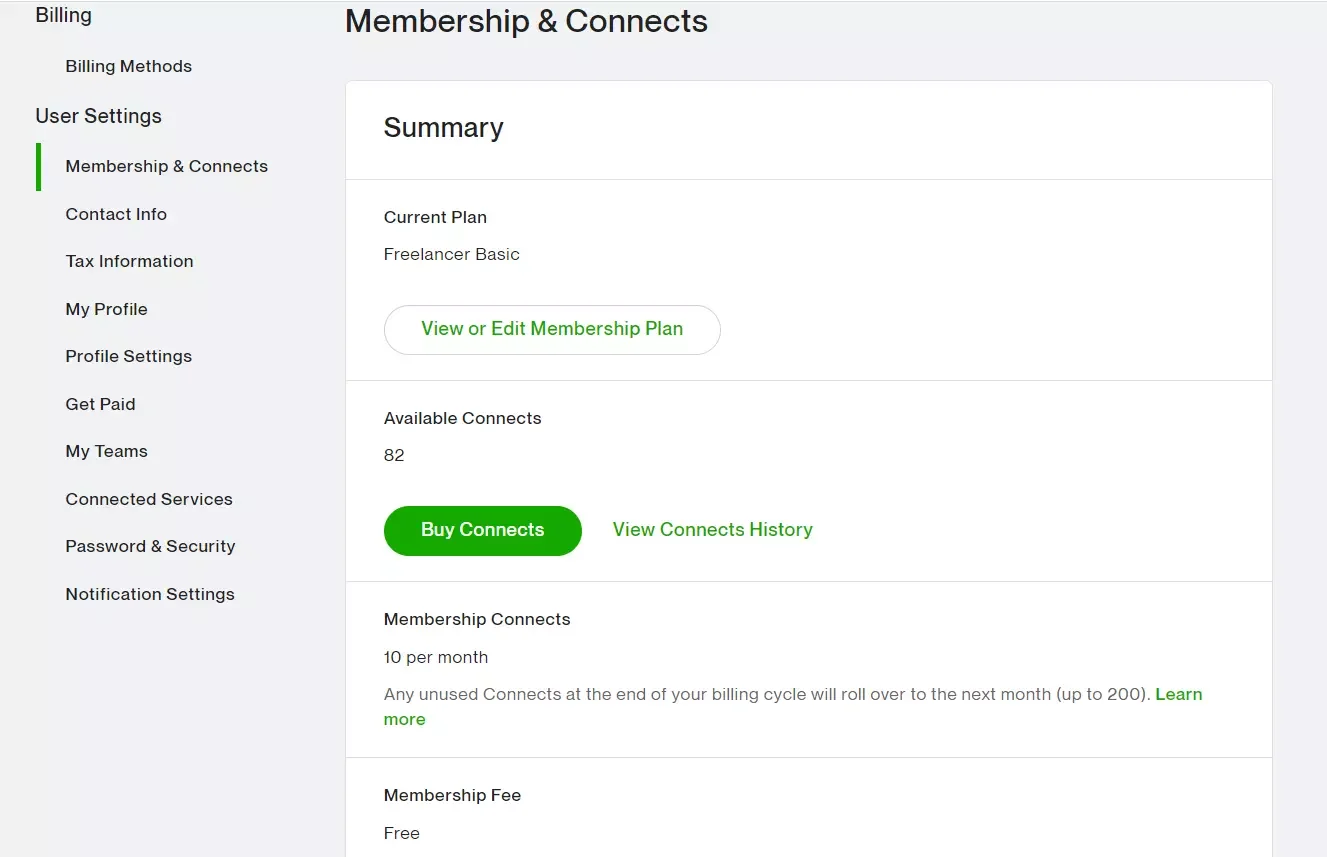
The credit-based model is ideal for customers who know they’ll need a product but are uncertain when or how much they’ll use it. Customers purchase a specific number of credits upfront, which they can redeem later as needed. If usage increases, they can always buy more credits.

Credit-based pricing offers users a considerable level of control. Customers pay only for what they use and can access the product whenever they need it. Additionally, they pay before they have access to the product, which can help accelerate cash flow for the SaaS provider. However, if a customer accumulates too many unused credits, engagement may drop, increasing the risk of churn.

Example: With Upwork, freelancers can purchase “Connects”, allowing them to apply for jobs anytime.

Blog image

The Difference Between a Pricing Strategy and a Pricing Model

Pricing strategy and pricing model are terms that are often used interchangeably.

Pricing strategy is the guiding processes and principles behind how you set price points, package your product, and choose your pricing model. The best pricing strategy greatly depends on the market you operate in and the customers you serve.

Pricing models are the format and structure of your pricing and packaging. You can often identify a company’s pricing model just by looking at its pricing page — without knowing much about who they are or what they do.

How Do You Choose The Right Pricing Strategy For Your SaaS Company?

Now that you are familiar with the different SaaS pricing models and strategies available, the next step is choosing one that best fits your business. When deciding on the right solution, begin by asking yourself the following questions:

  • What core value does our product deliver, and how does it differ from competitors?
  • Who is our primary target market, and what motivates their purchasing decisions?
  • How do we expect customers to pay — digitally, through partners, or another channel?
  • What is our current financial position, and how do we envision scaling revenue over time?
  • How will we measure and refine our pricing model’s effectiveness?

There’s no single best pricing strategy for every SaaS business. If you’re in the early stages, experiment with different approaches before committing long-term. Taking time to answer these questions will help you choose the strategy that aligns with your goals and customers.

How to Choose the Right Pricing Model for Your SaaS Business?

Put yourself in customers’ shoes and ground every decision in data. Here are the key steps to help you build a sustainable and scalable pricing model:

  • Track your LTV/CAC ratio before finalizing any model. It helps ensure your approach keeps the business financially healthy and supports long-term growth.
  • Pricing is a company-wide decision. Marketing, Sales, Product, and Management should collaborate to position, package, and target your audience effectively.
  • Use customer data and research to understand who your buyer personas are and what drives their purchasing decisions. This helps you align pricing and packaging with real customer needs without assumptions.
  • Once you understand personas, design pricing tiers that reflect different value levels. For example, startups may need lean functionality, while enterprises require advanced capabilities — and pricing needs to reflect that distinction.
  • Leverage insights from current and prospective customers to refine your pricing. Ask directly what they value most and how they perceive your pricing. Real feedback is far more reliable than guesswork.

How to Track and Analyze the Pricing Performance?

Finding the right pricing model takes time and that’s okay. What matters most is tracking how well your chosen model performs. Pricing shouldn’t rely on guesswork and it should evolve from continuous analysis and data-driven insight. Understand your cost structure and track the metrics that matter.

LTV/CAC Ratio

How to calculate: Compare the average customer lifetime value (LTV) with your customer acquisition cost (CAC).

Why it matters: The ratio should be greater than 1 to ensure profitability. A lower ratio signals slow payback and risk of loss on new customers.

Gross MRR Churn

How to calculate: (Monthly MRR Churn ÷ Total Monthly MRR) × 100

Why it matters: Shows how much recurring revenue you lose from cancellations or downgrades. A rate above 5% indicates unhealthy churn.

Expansion MRR

How to calculate: ((Expansion MRR at end of month – Expansion MRR at start of month) ÷ Expansion MRR at start of month) × 100

Why it matters: Reflects how much existing customers increase their spending through add-ons or modules. Growth here means strong product-market fit.

Upgrade MRR

How to calculate: Cost of upgraded plan – cost of previous plan

Why it matters: Tracks how many customers move to higher tiers for advanced features. Stagnation means you’re underpricing or not differentiating tiers well.

Conclusion

Pricing is not set in stone. Markets move. Customers evolve. Technology reshapes what “value” means. It's a continuous process that evolves with your product, market, and customers. Here’s what separates SaaS teams that scale from those that stall:

  • Pricing evolves over time. Reassess it regularly as your product matures.
  • Let pricing scale with product value. The more value you deliver, the more confident your pricing should be.
  • Align pricing with packaging. Plans should clearly communicate the benefits each buyer segment receives.
  • Move fast. Pricing changes shouldn’t take weeks — your systems and strategy should support quick adjustments.

Pricing isn’t about guessing a number. It’s about defining the value exchange between what you build and how the world sees it. The faster you adapt to that exchange, the longer you thrive.

At Energma, we bridge engineering, marketing, sales, and business knowledge to help you launch the SaaS products that sell themselves.

Let’s build your next product the right way.

Table of Contents

  • What are SaaS Pricing Strategies?
  • Types of SaaS Pricing Strategies
    • Cost-based pricing
    • Penetration pricing
    • Competitor-based pricing
    • Value-based pricing
  • What are SaaS Pricing Models?
    • Freemium pricing
    • Flat-rate pricing
    • Usage-based pricing (pay-as-you-go)
    • Tiered pricing model
    • User-based pricing
    • Feature-based pricing
    • Credit-based pricing
  • The Difference Between a Pricing Strategy and a Pricing Model
  • How Do You Choose The Right Pricing Strategy For Your SaaS Company?
  • How to Choose the Right Pricing Model for Your SaaS Business?
  • How to Track and Analyze the Pricing Performance?
    • LTV/CAC Ratio
    • Gross MRR Churn
    • Expansion MRR
    • Upgrade MRR
  • Conclusion