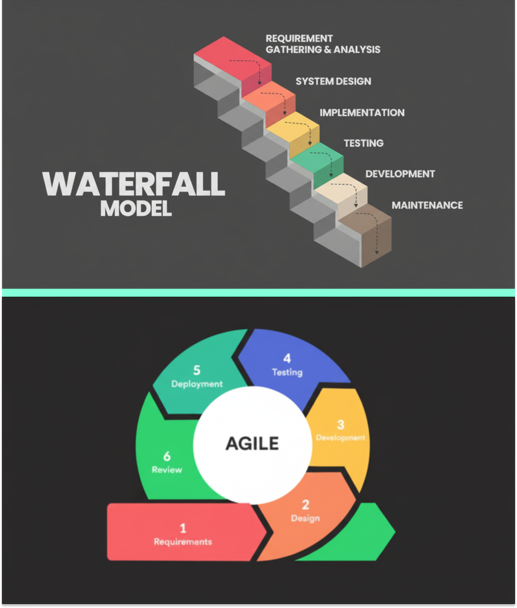
This is perhaps the most costly myth in software development. Many think that once the software is built, the work is over. In reality, launch is the starting line. As soon as the product is released, the focus has to be on receiving feedback from the users and incorporating it into an iterative approach. This requires an ongoing process of improvements and revisions along with rigorous testing for bugs in order to provide the customer with the best quality product.
For example, in the early 2000s, there was an application named MySpace. This app neglected regular updates, failed to adapt user preferences, and didn't invest in new features. When competitors like Facebook emerged with clearer interfaces, faster performance, and superior user experience, MySpace couldn't keep up.
Remember, your v1.0 is a prototype tested in the only relevant lab: the market. The winning companies are those that listen harder and iterate faster. They understand that a product's "perfection" is a metric that changes daily, measured by user satisfaction, not a development checklist. Continuous improvement is what scales a project into a product and a product into a company. The most successful tech giants don't just build and release. They build, learn, measure, and iterate forever.