First visit

Choose your realm

How should Energma appear to you? Your choice is remembered on this device — change it anytime from the header.

  • What we do

    Full Cycle DevelopmentIT Staff AugmentationAI DevelopmentEnterprise Application DevelopmentTechnology ConsultingVenture Studio

    What if...

    You are Founder?You are Investor?
    Service Preview
    Service preview

    Full Cycle Development

    End-to-end software development from concept to deployment, using cutting-edge technologies and best practices.

    Learn more
  • Blog
    Move Fast, Keep Your Equity: Energma's Venture Studio ModelStop Leaking Data and Budget: Local LLM Setup in 20 MinutesAutomate your workflow with Atlassian and Claude CLIClaude Code: Installation & Basic Usage GuideContainerizing Node.js Microservices with Docker & Kubernetes
    Company News
    Tighter Bounds, Tested: q-Berezin Radii RevisitedA Sharper Bound: New q-Berezin Radius ResultsThe Newest q-Berezin Radius Results: A Discipline of Getting It RightBuilt Around Your Privacy: Citadel Auth 1.0 Is Now LiveYour Device, Your Rules: Introducing Citadel Auth 2FA
    Case Studies
    The New Blueprint: AI-Driven Mortgage EngagementOne Hub. Unified Fintech Control.From Static to Addictive: Content Exchange PlatformMeetings, Transformed: Gesture-Led WorkspaceOperations, Synced: End-to-End Live Process Monitoring
    Featured resource
    Featured article

    The New Blueprint: AI-Driven Mortgage Engagement

    Rebuilt outdated systems and UX to boost performance, accelerate feature delivery, and simplify integrations for a leading real estate tech platform.

    Read more
    See all case studies
  • About Us
  • FAQ
Get Started

We deliver advantage beyond features.
What will you ship?

Get Started
  • Full Cycle Development
  • IT Staff Augmentation
  • AI Development
  • Enterprise Application Development
  • Technology Consulting
  • Venture Studio
  • Case Studies
  • Blog
  • Company news
  • About
  • FAQ
  • Contact Us

Follow Us

Site MapTerms of UsePrivacy Policy
© Energmа 2026. All rights reserved.
Železnička 94, 11300 Smederevo, Serbia

Cookie Preferences

We use cookies to enhance your browsing experience, serve personalized content, and analyze our traffic. Choose your preferences below.

Essential Cookies

These cookies are necessary for the website to function properly. It is accepted by default.

Always On

Analytics Cookies

These cookies help us understand how visitors interact with our website by collecting and reporting information anonymously.

Marketing Cookies

These cookies are used to track visitors across websites to display relevant advertisements.

Tighter Bounds, Tested: q-Berezin Radii Revisited

Authors
Vuk StojiljkovićEnergma research partner

Faculty of Science, University of Novi Sad, Trg Dositeja Obradovića 3, 21000 Novi Sad, Serbia

Mehmet GürdalMath PhD

Süleyman Demirel University, Isparta, Turkey

Fuad KittanehMath PhD

Department of Mathematics, The University of Jordan, Amman, Jordan

Hamdullah BaşaranMath PhD

Süleyman Demirel University, Isparta, Turkey

Published: October 13th 2026

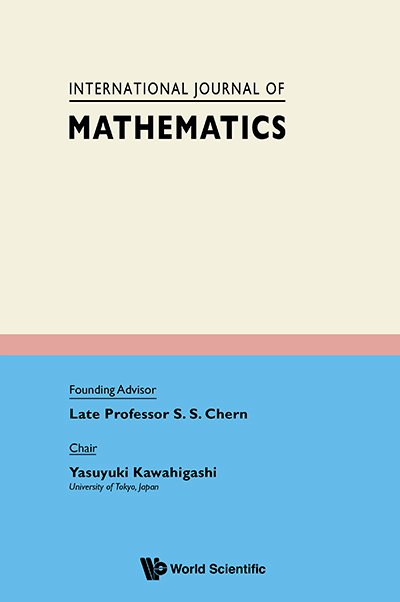
A good bound is one you can trust, while the best ones are tight enough to be reached. That is the thread running through the newest paper from our research partner Vuk Stojiljković, "Refined inequalities for the q-Berezin radii of operators on reproducing kernel Hilbert spaces," published in International Journal of Mathematics.

International Journal of Mathematics journal cover

Co-authored with Hamdullah Başaran, Mehmet Gürdal and Fuad Kittaneh, the paper continues our earlier q-Berezin work. Where that paper corrected a proof and added a lower bound, this one refines the upper bounds themselves and then tests them.

The paper fixes q in (0, 1] and works with kernels whose normalized family contains pairs with inner product q. It then builds results in three steps:

  • Kernel-norm bounds: Upper bounds for the q-Berezin radius in terms of the Berezin number and min{N(T), N(T*)}, where N is the kernel norm.
  • Two views of one operator: Buzano's inequality and a Gram determinant inequality, applied to Tû_λ and T*û_λ, give further bounds involving ber(T²) and N(ωT − T*) with |ω| = 1.
  • Beyond a single operator: Inequalities for 2×2 operator matrices, using numerical radius estimates and a specified family of normalized kernels, with applications to operator products and commutators.

The paper also checks its own work. A finite-dimensional example compares the new bounds with an earlier estimate. A finite-rank operator on the Hardy space attains equality in the Buzano bound at q = 1, so that estimate is sharp in this case.

The mathematics is abstract, but the discipline behind it is familiar:

  • Looking from both sides: Analyzing Tû_λ and T*û_λ together yields further bounds. We apply the same principle when we review a system from both the producer and consumer side.
  • Divide into blocks: The 2×2 operator-matrix results show how a complex structure can be understood through its parts, like the modular architecture we use for large enterprise systems.
  • Test it against examples: Concrete comparisons keep a claim honest, just as we validate designs against real workloads.
  • Know when a bound is tight: An equality case shows exactly where a limit sits. In engineering, that kind of boundary case is what stress testing is for.

Refining a result and then showing the bound can be reached is how we approach engineering at Energma. We build systems on guarantees we have tested, and we keep testing them.

Ready to get to the headlines?

Talk to one of our solution experts and start the journey.

Book the Call